What Does It Mean to Flourish? A Nature-Based, Daoist & Psychological Definition
By Sonja Alina den Elzen, R.Ac, registered acupuncturist, Traditional Chinese Medicine practitioner, and founder of Nature, Alchemy + Cultivation and The Living Spiral, based in Ontario, Canada.
Quick Answer: What Does It Mean to Flourish?
Flourishing means moving beyond mere survival into a living, reciprocal relationship with yourself, your community, the Earth, and the creative force of life. It is not a personal achievement or a fixed state you finally reach; it is an ongoing relationship of nourishment given and received, drawing on frameworks from positive psychology (Tyler VanderWeele, Corey Keyes), Daoist philosophy (the Dao De Jing), and Indigenous and animist traditions (Robin Wall Kimmerer's concept of reciprocity).
I have been digesting and metabolizing the idea of nature's baseline: when left to its natural order, it is to flourish, and what it would take for humanity to flourish. Not just a few, but as a collective whole.
As a collective, it seems like we have been surviving, striving for thriving, and very few would claim to be flourishing.
What would it look like to set our sights on the flourishing of people, flourishing communities, and flourishing ecosystems? What would that actually mean?
What if we stepped away from our dominant culture perspective of consuming and shifted it to flourishing?
We would first have to have a deep, integrated understanding of what that looks like.
Perhaps we imagine a life that looks successful from the outside. Enough money. Good health. Meaningful work. Loving relationships. A sense that things are going well.
These things matter. But I think flourishing reaches deeper. And many Earth-based spiritual, Indigenous, and animistic cultures have the embodied understanding that flourishing includes so much more than ourselves and our immediate family.
To shift to flourishing, we will need to shift our perspective to respectful relationship with all of life.
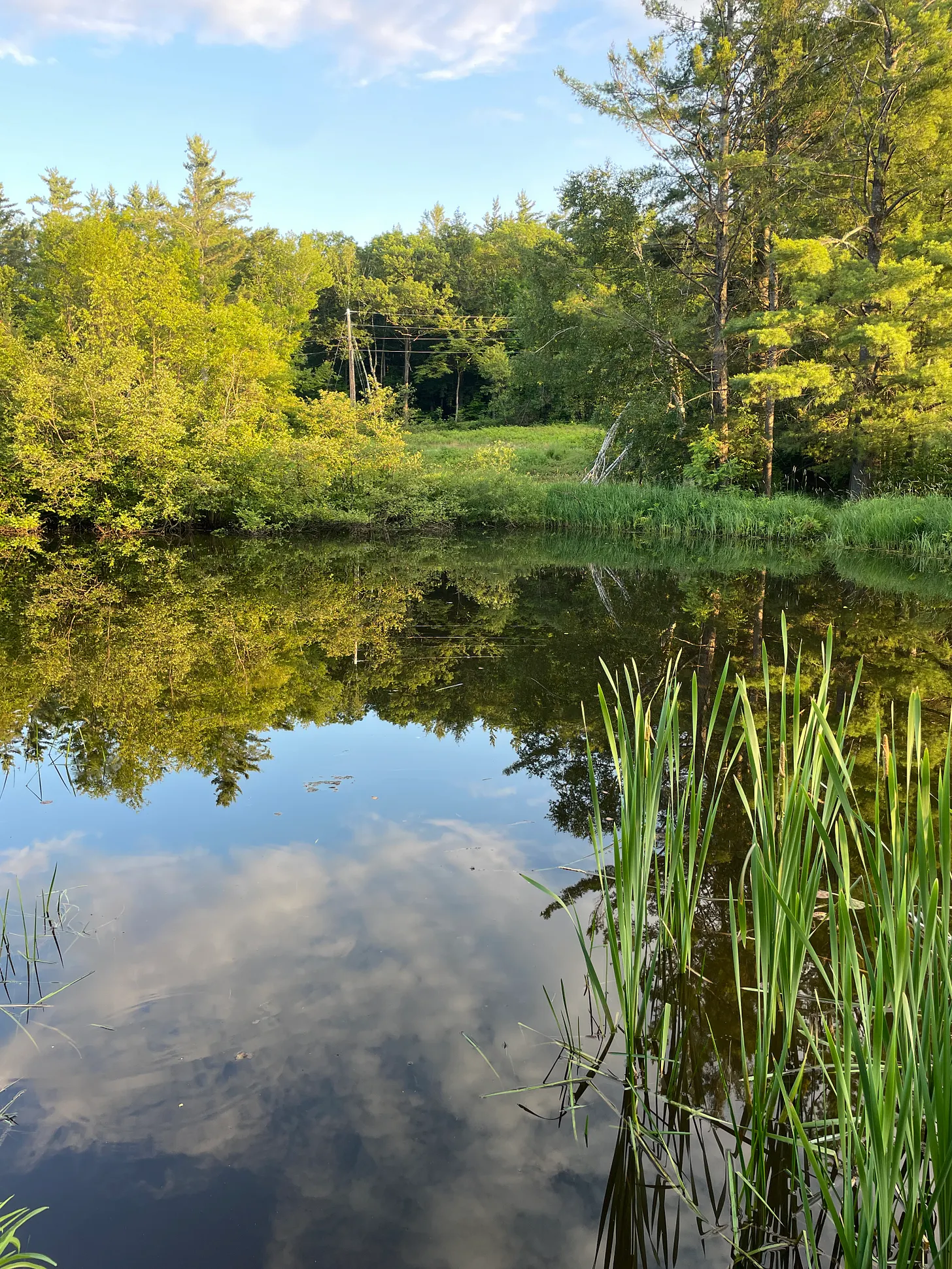
When I picture a flourishing life, I see a tree, a forest, a jungle, a mycelium network, rich spongy moss, plants and vines all intertwined, rich earth, fresh air, sparkling moving waters all nourishing one another through never-ending cycles of birth, growth, decay, gestation.
With the tree, its visible beauty is only possible because its roots are in the web of mycelium that connects all of life under the soil, and its leaves breathe the air. The soil holds nourishment. There is enough water and sunlight. The tree is responsive to the season. It knows when to reach outward, when to fruit, and when to draw its energy inward.
It does not flourish alone. It is in relationship, to the elements, the climate, the other plants, animals and pollinators, the soil, the air.
Fungi carry messages and nutrients through the soil. Insects pollinate its blossoms. Birds make homes in its branches. Fallen leaves return nourishment to the ground. Pollens and nuts nourish many beings.
The health of the tree is due to the health of its relationships.
I believe this is also true for us.
What Is the Difference Between Surviving, Thriving, and Flourishing?
Short answer: Surviving means getting through the day; thriving means functioning well; flourishing means being fully, reciprocally alive in relationship with life, able to give from natural overflow rather than depletion.
To flourish is to move beyond surviving and into thriving.
Your root feels sufficiently nourished and safe. Your body is not spending all its energy bracing against life. You have access to aliveness, meaning, creativity, and direction. You can give without continually emptying yourself or fear of not enough.
Generosity arises from natural overflow.
This does not mean that life becomes perfect. A flourishing life still contains moments of grief, uncertainty, illness, challenges, and long winters. A healthy forest contains decay as well as growth. But instead of being in the "struggle," there is a deeper understanding of the rhythms and cycles of life, of birth, growth, harvest, and decay that then nourishes birth again. From this holistic perspective, the ability to be in flow with the constant transformation of life becomes an overall understanding of the natural order and an ability to be in harmony and aligned with appropriate response rather than reaction. It becomes a dance with life, where you are in flow and naturally able to be in step with its grace.
I remember the first time I felt a natural sense of abundance. I had gone foraging with a teacher and friend. Upon returning home, I had a basket full of elderberries, chokecherries, and various edible mushrooms. I made a fry-up with some mushrooms, and dried the rest for future use; the elderberries I made into an elderberry syrup for my winter medicine; the branches I put in a dye pot to experiment with dye colour on fabric; and the chokecherries I froze for later use. Such a natural sense of abundance and gratitude overcame me; the idea that the ever-generous Earth had so much goodness to share in an afternoon of nature time was so heart-filling. I would even say a sense of flourishing was sparked.
Thanks for reading Nature, Alchemy + Cultivation! This post is public so feel free to share it. Share this article
Flourishing is the capacity to remain in relationship with life through its changes.
How Do Psychology Researchers Define Human Flourishing?
Short answer: Modern positive-psychology research offers two influential, complementary maps of flourishing, Harvard researcher Tyler VanderWeele's five-domain model (2017) and sociologist Corey Keyes' flourishing-vs-languishing continuum (2002).
Modern research offers one map. Harvard researcher Tyler VanderWeele describes human flourishing through five broad areas: happiness and life satisfaction, physical and mental health, meaning and purpose, character and virtue, and close social relationships. His model also recognizes financial and material stability as conditions that help sustain these areas over time. (VanderWeele, "On the Promotion of Human Flourishing," PNAS, 2017)
Psychologist and sociologist Corey Keyes makes another helpful distinction. Mental health is more than the absence of mental illness. Flourishing includes the presence of positive feelings and positive functioning. Languishing describes the experience of being alive without feeling fully engaged in life. (Keyes, "The Mental Health Continuum: From Languishing to Flourishing in Life," 2002)
Comparison: Two Research Frameworks for Flourishing
| Researcher | Field | Publication | Core Idea | Key Components |
|---|---|---|---|---|
| Tyler VanderWeele | Epidemiology / Harvard Human Flourishing Program | PNAS, 2017 | Flourishing has five sustaining domains, supported by financial/material stability | Happiness & life satisfaction · Physical & mental health · Meaning & purpose · Character & virtue · Close social relationships |
| Corey L. M. Keyes | Sociology / Psychology | American Journal of Public Health, 2002 | Mental health exists on a continuum from languishing to flourishing | Positive feelings (emotional well-being) · Positive functioning (psychological & social well-being) |
These frameworks give language to something many of us already feel, and they are also limited in what true flourishing encompasses.
There is a difference between getting through the day and being met by life and being in deep reciprocal relationship with life.
There is a difference between functioning and feeling alive.
Why Can't We Flourish Alone?
Short answer: Because flourishing is relational, not purely individual, no amount of personal self-improvement can substitute for clean water, safe housing, economic opportunity, trustworthy community, or social justice.
We are often taught to treat well-being as a personal achievement.
Eat better. Think better thoughts. Become more disciplined. Regulate your nervous system. Work harder on yourself.
Personal cultivation matters. Self-worth, health, knowledge, motivation, and a commitment to growth all shape our capacity to flourish. But no amount of inner work can make clean water, safe housing, economic opportunity, trustworthy community, or social justice irrelevant.
We need personal roots and nourishing soil. We need all the tiny decisions we make in a day to be naturally inclusive of the living world around us.
A flourishing culture creates conditions where life can thrive. It values care, cooperation, respect, shared resources, and responsibility across generations. Wealth is measured by what circulates and what is nourished.
This is why I am interested in matriarchal values. I do not mean women replacing men within the same structures of domination. I mean social forms organized around care, reciprocity, relationship, and the protection of life.
Nature, Alchemy + Cultivation is a reader-supported publication. To receive new posts and support my work, consider becoming a free or paid subscriber.
What would change if our communities measured success by the vitality of children, elders, waters, soils, and future generations?
Related reading: Cultivating Our Capacity As Humans to Thrive With All of Life
What Does Daoism Teach About Flourishing?
Short answer: In Daoist philosophy, flourishing is not a fixed achievement but a quality of relationship with the Dao, the ultimate source and pattern of all living things, cultivated through meditation, breath, movement, and reflective living.
From a Daoist perspective, flourishing is not a fixed state we finally achieve.
It is a quality of relationship with the Dao, the ultimate source and pattern of all living things in a dance of constant transformation.
Living in spontaneous, harmonious alignment with the Dao, the natural constant transformation of reality, life feels effortless, alive, and deeply attuned.
Alignment with the Dao is found through meditation, breath, movement, and reflective living.
Individual flourishing is not isolated; it includes the wider community and natural world.
Humans and all living beings are not separate from each other; they share the qi (life-force energy), so there is a responsibility to nurture relationships and life. Cultivating life is the art of living like a gardener.
Cultivating life is a way of being that is spontaneous, unforced, harmoniously integrated with the order of nature and the Dao, expressed with ease, vitality, ethical sensitivity, and ecological care in everyday life.
Ritual, connection with spiritual archetypes, ancestors, elemental spiritual archetypes, and cultivation of mind, body, and spirit all weave in respect to the natural rhythms, cycles, and order of the cosmos and earth.
Non-doing (wu wei) happens by responding to life in alignment with truth, with what is, rather than reacting from projection.
How Does the Dao De Jing Describe the Pattern of Flourishing?
Short answer: The classical Chinese text the Dao De Jing offers a four-step nested pattern of alignment:
- Human follows Earth.
- Earth follows Heaven.
- Heaven follows the Dao.
- The Dao follows what is natural.
The human being is nested within larger orders of relationship.
When our lives become disconnected from Earth and cosmos, we lose more than pleasant contact with nature. We lose living instructions.
We forget when to act and when to wait, when to express outward and when to nourish inward. We expect ourselves to remain equally productive in every season. We treat emotion as disruption rather than intelligent opportunities for growth. We override the body's messages until it must speak more loudly.
As we cultivate our human qualities and holistic relationship sensitivity to our environment, our internal and external ecosystems develop, and effort can become more appropriate, more graceful, and easeful. We stop forcing. We recognize when energy wants to rise, gather, disperse, ripen, or rest. We become tuned into our inner sovereignty, our interdependent relationships, spirit, and the earthly and cosmic order.
Life may begin to feel more coherent, because we are not trying to control it, because we are listening and participating.
Related reading: What is Alchemy? · The Path of Initiation through the Five Transformations · Rhythm and Cycles
What Do Indigenous and Animist Traditions Teach About Flourishing?
Short answer: Many Indigenous knowledge systems frame well-being as relational, held within relationships among people, land, waters, ancestors, and more-than-human kin, emphasizing reciprocity, responsibility, gratitude, and continuity across generations.
Many Indigenous knowledge systems hold well-being within relationships among people, land, waters, ancestors, and more-than-human kin as a way of being. These traditions are distinct and should not be collapsed into one worldview. Yet many carry teachings about reciprocity, responsibility, gratitude, and continuity across generations.
Robin Wall Kimmerer writes from her Potawatomi heritage and her life as a botanist about gratitude and reciprocity. If the living world continually gives to us, gratitude alone is incomplete. A gift creates relationship and responsibility. (Kimmerer, Braiding Sweetgrass, Milkweed Editions)
How are we nourishing back that relationship and responding to our responsibility to be a worthy participant in the web of living?
Animist thought also understands the world as alive with beings, only some of whom are human. Rivers, plants, animals, stones, winds, and places are not merely scenery or resources. They are participants in a living community.
Within this understanding, flourishing cannot mean personal comfort purchased through the consumption and depletion of everything around us.
If the land is dying, the community is fractured, and our bodies are chronically overwhelmed, we cannot call the system successful or even surviving simply because a few individuals are prospering.
The health of the person belongs to the health of the whole.
How Can You Become a "Person of Place"?
Short answer: By intentionally learning your local bioregion and watershed, noticing seasonal plant and bird cycles, lunar rhythms, and the solstices and equinoxes, so that place becomes a relationship rather than a backdrop.
Many of us no longer live where generations of our ancestors lived. We may not have inherited stories, ceremonies, or a deeply rooted relationship with the land beneath our feet.
This absence can become an ache. It can also become a responsibility.
We can begin where we are.
We can learn the bioregion we inhabit. We can learn the watershed that gives us water. We can notice which plants return first in spring, where the sun sets in winter, when the birds migrate, and how the moon changes the waters within and around us. We can learn to cultivate a relationship with all of this, with care, awareness, and reciprocity, caring for it as a part of us. Through observation and cultivation, we can be in an aligned relationship with it through our life choices.
We can eat with greater attention to season and bioregion. We can offer gratitude. We can care for soil, water, plants, animals, neighbours, and the elemental forces that sustain us.
If our ancestral relationship with one place has been interrupted, the larger rhythms of Earth and cosmos can help orient us: the solstices, the equinoxes, the seasons, the stars. Then we listen closely enough to understand how those rhythms express themselves here.
Place stops being a backdrop to our human lives.
It becomes a relationship.
Related reading: What is it to be human? · Fire Horse Year
What Is the "Creative Pattern of Life"?
Short answer: Life itself is creative energy, visible in a seed reaching toward light, a wound repairing, or a forest regenerating after fire, and flourishing means becoming more available to that creative movement as both beneficiary and contributor.
Life is creative energy.
We see it in the seed reaching toward light, the body repairing a wound, and the forest returning after fire. Living systems tend toward relationship, adaptation, and new forms of possibility when conditions support them.
When we are flourishing, we become more available to this creative movement.
We may feel drawn toward ideas, people, and experiences that expand us. Meaning becomes easier to sense. We notice timely encounters and unexpected pathways. Flow states arise more naturally because body, attention, and action are moving together.
Julia Cameron writes, "Creativity is the natural order of life. Life is energy: pure creative energy." (Cameron, The Artist's Way)
This creative force is not ours to possess. We participate in it. And the more we participate with presence, the more the creative flows with us.
It moves through the song, garden, healing session, meal, honest conversation, community, or new way of living we help bring into form.
Then what moves through us feeds life around us.
We become both beneficiaries and contributors.
This is reciprocity. It is also the basic pattern of life.
What Does Flourishing Feel Like? (Signs & Signals)
Short answer: Flourishing shows up as felt safety, vitality, resilient (not hardened) relationships, generous boundaries, and everyday creativity, as much in the mundane as in peak moments.
Flourishing may show itself as:
- Enough inner safety to stay open to life
- Vitality, meaning, and a felt sense of direction
- Resilience without hardening
- Relationships shaped by generosity and healthy boundaries
- Creativity that contributes to the wider living world
It is also in the mundane of life, or the art of living.
A nourishing, locally, seasonally based meal. A body able to rest and play and contribute. Work (or, I prefer to see this contribution as devotion) that carries meaning. The courage to respond honestly and be in integrity. The ability to receive love. Enough space within us to notice beauty.
Flourishing is not a private accomplishment or a permanent peak.
Thanks for reading Nature, Alchemy + Cultivation! This post is public so feel free to share it. Share this article
It is the living experience of being nourished by life, responding appropriately to life, and returning nourishment to life.
Your roots are tended. Your relationships can breathe. Your gifts have somewhere meaningful to travel. The creative life force can move through you and return, through your participation, to the wider world.
Your loved ones, your community of humans and all living beings, flourish with you.
Perhaps the question is not only, "Am I flourishing?"
Perhaps we might also ask:
What is flourishing through me?
What conditions help life come alive here?
What is nourishing me and what am I nourishing in return?
Frequently Asked Questions About Flourishing
Is flourishing the same thing as happiness?
No. Happiness is one component within flourishing; VanderWeele's model (2017) lists happiness and life satisfaction as just one of five domains, alongside health, meaning and purpose, character and virtue, and close relationships.
Can you flourish during hard times, grief, or illness?
Yes. A flourishing life still contains moments of grief, uncertainty, illness, and long winters, just as a healthy forest contains decay as well as growth.
What is the Daoist view of flourishing?
In Daoist philosophy, flourishing is a quality of relationship with the Dao, cultivated through meditation, breath, movement, and reflective living, rather than a fixed state permanently achieved.
How is human flourishing measured in psychology research?
Two influential frameworks are Tyler VanderWeele's five-domain flourishing model (Harvard, PNAS, 2017) and Corey Keyes' flourishing-languishing mental health continuum (2002).
Why is flourishing described as relational rather than individual?
Because personal well-being cannot be separated from the health of one's community, land, and relationships, as reflected in Robin Wall Kimmerer's concept of reciprocity in Braiding Sweetgrass.
What is a practical first step toward flourishing?
Becoming a person of place: learning your local bioregion, watershed, and seasonal rhythms so your environment becomes a relationship rather than a backdrop.
Continue Exploring: The Living Spiral
The Living Spiral is a year-long journey through ancient living wisdom of the five transformations, embodiment, emotional alchemy, and relationship with the living Earth.
It is a place to cultivate the inner ecology and relating that allows your life, relationships, and contribution to flourish.
Learn more about the Living Spiral →
Nature, Alchemy + Cultivation is a reader-supported publication. To receive new posts and support my work, consider becoming a free or paid subscriber.
References and Further Reading
- Tyler J. VanderWeele, "On the Promotion of Human Flourishing", Proceedings of the National Academy of Sciences, 2017.
- Corey L. M. Keyes, "The Mental Health Continuum: From Languishing to Flourishing in Life", 2002.
- Robin Wall Kimmerer, Braiding Sweetgrass, Milkweed Editions.
- Julia Cameron, The Artist's Way.
Related posts on Nature, Alchemy + Cultivation: