What Is the Dao? How Nature Teaches Us the Way
The Way of Reality, Nature and Human Life
By Sonja Alina den Elzen, R.Ac. ~ September 5, 2026

For when we get lost, the Way is always there.
Nature demonstrates for us the Way.
The Dao, often translated as “the Way,” is the natural order through which life arises, transforms and returns. In Daoism, it is understood through the patterns of nature, the movement of yin and yang, and the human practice of living in harmony with reality. We come to know the Dao through relationship, observation and participation rather than through intellectual understanding alone.
What Is the Dao?
In Daoism, the Dao is the source and fundamental principle of the universe, representing the natural order and flow of reality. It is an impersonal, formless and eternal force underlying existence. It is often approached as an enigmatic process of transformation rather than a deity. The Dao can be understood through three primary aspects:
- The Way of Reality: The ultimate, ineffable truth and origin of all things.
- The Way of Nature: The spontaneous, dynamic patterns and rhythms observed in the natural world.
- The Way of Human Life: The practice of living in harmony with nature and reality, often through wu wei, simplicity and appropriate action.
Ultimately, the Dao cannot be fully defined or grasped intellectually. It is experienced by aligning one’s life with the natural flow of the cosmos and the earthly energetics.
This is a way of being in relationship, engaging with life through reciprocity and respect, and offering ourselves to the creative energy of life.
What Does Nature Teach Us About Transformation?
Nature shows us that reality is based upon constant transformation. This transformation arises through relationships among the forces of the earthly plane.
Everything is always responding to everything else within its ecosystem. Thousands of relationships are at play, with energetic forces negotiating, metabolizing, twisting and turning around one another.
Within the human body, bacteria in the intestines respond to the food moving through them. Electrical impulses travel between our nerves and brain. Hormonal cascades respond to sunrise and help govern waking and sleep. Hair and nails grow. Muscles metabolize energy to generate movement.
The interrelationships among the organs help nourish us for the physical and emotional movements of the day. These processes are inseparable from our environment and our relationships with human and other-than-human beings.
Everything exists in constant relationship and activity, from the minute and subtle to the abrupt and obvious. This is the abundance and intimacy of life.
Nature teaches us to metabolize and integrate what is ours to do, while trusting the rest of life to do what is its own to do.
Natural Order Within Wildness
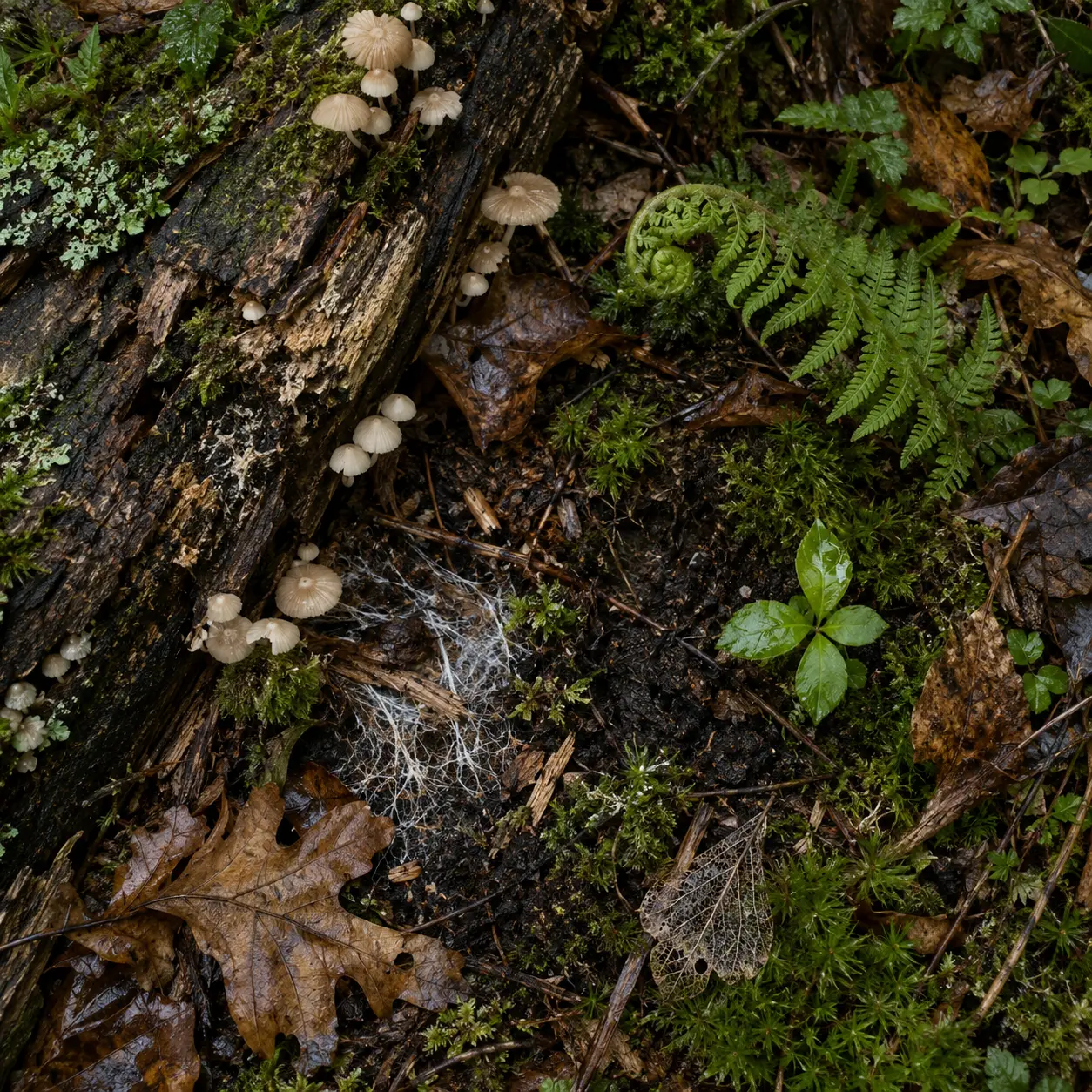
Nature also reveals cosmic patterns and natural order. The sun rises in the east and sets in the west. Equinoxes and solstices arrive through a precise pattern. The moon moves from dark to full and returns to dark, while the tides respond to the moon. As yin increases, yang decreases, and as yang increases, yin decreases.
Nature teaches us that transformation requires difference and polarity. Life on Earth unfolds through duality, yet these apparent opposites belong to one movement.
The more closely we observe and cultivate a relationship with nature’s principles, the more available we become to flow with reality. We begin to sense how to respond appropriately.
Nature left to itself may look like wild chaos, yet a natural order moves within that wildness. What enters a cycle of decay is metabolized by life-force energy, just as compost becomes fertile, life-giving soil.
Nature teaches us how to flourish in a living world that is always transforming. Stagnation eventually diminishes vitality.
Through nature we encounter the cycles of life and death. By observing and relating with these principles, effortlessness can arise from being in harmony with reality as it is.
Nature also teaches art, beauty, patience, mathematical pattern, symphonies of sound, negotiation, sufficiency, abundance, play and being. We may not understand why something exists, yet we can trust that its existence belongs somewhere within the web of life.
Nature teaches adaptability and cooperation.
Six Daoist Principles We Can Learn from Nature
Ziran: The Self-So
Nature’s first teaching is that things unfold without being managed. Water finds its way downhill toward the lowest place. Seeds split open as yang energy ascends. Trees release their leaves in autumn as yin rises and yang descends.
Chapter 25 of the Daodejing describes humans as modelling Earth, Earth as modelling Heaven, Heaven as modelling Dao, and Dao as modelling ziran. Ziran points toward naturalness, spontaneous self-arising, or something being so of itself. It also acknowledges that the self is continually transforming.
Wu Wei: Effective Non-Forcing
When we watch a river, we see enormous power without strain. Water yields, assumes the shape of what contains it and enters the low places others avoid. Over time, a river can smooth and shape stone. Water freezing within a stone’s crevice can crack it open.
This is a model for action. Wu wei is neither passivity nor withdrawal. It asks us to release the excess effort created by ego and impatience, while staying in relationship with the forces already present. We learn how to work with them and respond to them.
A traditional story tells of a farmer from Song who pulled on his seedlings to help them grow and killed the entire field. Life cannot be hurried without consequence.
Cycles Rather Than Progress
Nature moves through returning rather than in straight lines. Yang reaches its fullness and yin begins. The full moon is already entering its waning. Chapter 40 of the Daodejing describes reversal or returning as the movement of Dao.
Daoism therefore understands decline, rest, winter and death as phases within a cycle. Forcing perpetual growth in a body, business or season violates the pattern and eventually degrades the quality of the wider web of life.
The Usefulness of Emptiness
The hollow of the wheel hub, the space inside the pot and the openness of the valley reveal that space is receptive. It provides a place for gathering, movement and nourishment.
In Daoist cosmology, space is generative potential rather than a passive container. It is linked with time, place and the movement of qi. Mountains, caves and rivers may be understood as places where these qualities gather with particular intensity.
Some contemporary perspectives also describe the relational space between beings as a field to which we each contribute. This is a philosophical interpretation rather than a settled scientific claim.
Daoist ritual specialists create ceremonial spaces that symbolically connect Heaven and Earth. Directional placements and cosmological correspondences form a temporary microcosm, which returns to ordinary space when the ritual is complete.
Philosophically, space embodies wu, meaning emptiness or absence. This perspective encourages wu wei and creative participation. It asks us to notice and respect the open spaces within conversations, relationships and environments so that balance can arise.
Softness Outlasts Hardness
Living plants are supple, while dead ones become brittle. A rigid tree may break in a storm, while grass bends and rises again. Sap withdraws from the outer branches in winter and returns with spring. Flexibility is a sign of vitality, while hardness can reveal what is already losing life.
Non-Hierarchy and Sufficiency
The ten thousand things arise without any single thing becoming the centre of life. Chapter 5 of the Daodejing describes Heaven and Earth as impartial. They do not play favourites. The balance of the whole does not depend upon human preference.
The teaching is to recognize enoughness: knowing when to stop, what is sufficient and when further effort would disturb the greater balance.
How Can We Live in Greater Harmony with the Dao?
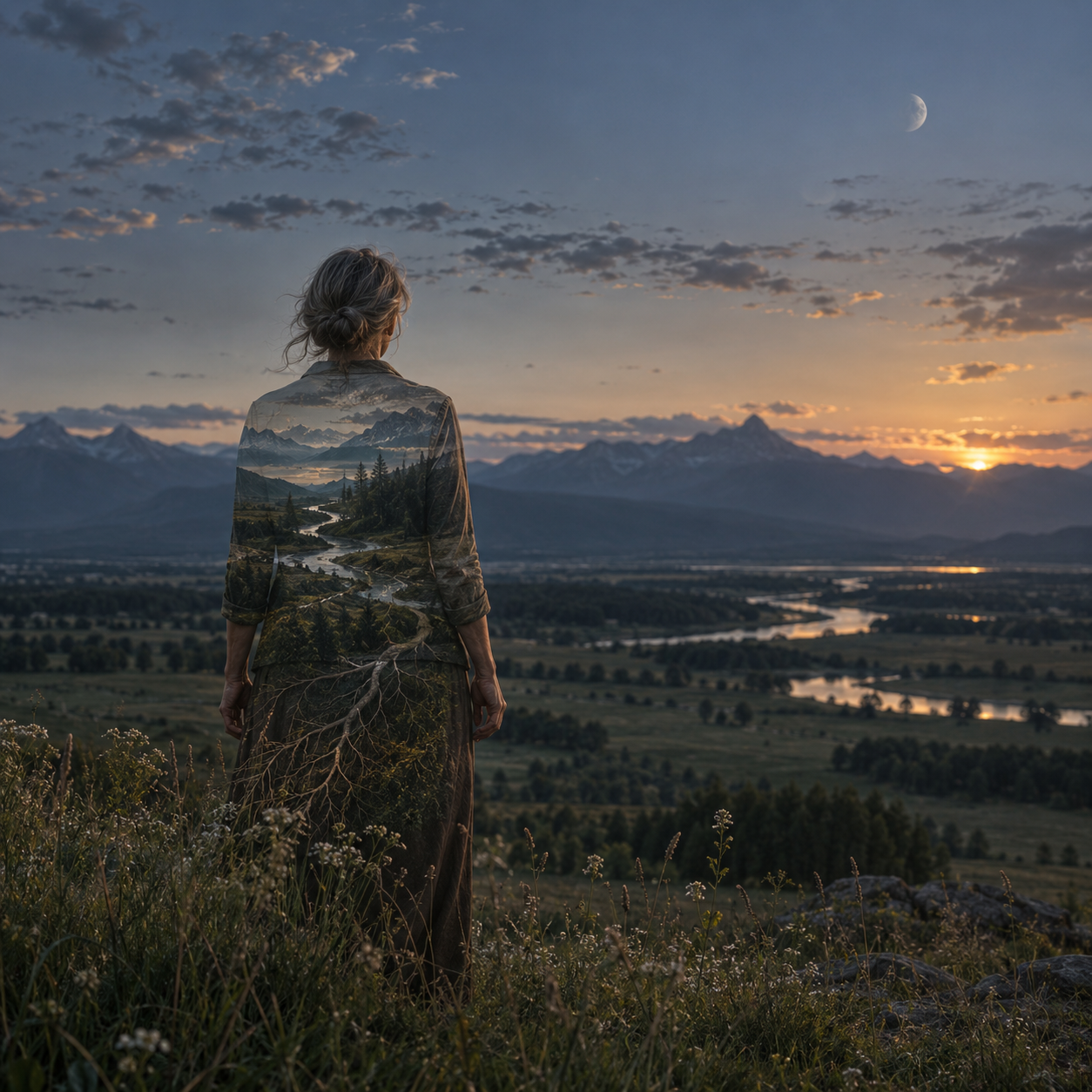
Living in relationship with the Dao begins by noticing what life is already communicating. Where is energy gathering, declining, becoming stagnant or asking to change? What season are you living within, regardless of what the calendar says?
Before trying to correct or control what is happening, pause long enough to locate yourself within the larger pattern. Observe where effort has become force, where rest is needed and where life is moving without your management. From there, ask what quality you are being invited to cultivate.
This is an embodied practice of learning to respond to reality. We locate ourselves within the cycle, relate to what is present, alchemize what is ready to change, cultivate what is needed and embody that understanding through the way we live. You may also explore living in relationship with the seasons.
You can begin by exploring the Living Relationship Compass to discover where life is inviting you to deepen in relationship.
The Deeper Teaching
Nature is more than a resource or metaphor. It is the living reality through which we discover how change behaves. Cultivation means learning to move with that grain and to participate consciously within it.
If you would like to understand the wider foundation beneath this work, read my philosophy of transformation and relational intelligence.
Explore the Living Spiral of Inner Alchemy
If you feel called to explore these teachings and cultivate the relational field within your own life, the Living Spiral of Inner Alchemy offers a year-long journey through nature’s Five Transformations and their living wisdom.
Together, we learn to read and alchemize the natural patterns moving through our bodies, emotions and relationships, and influencing our purpose and participation in the living world.
Through Daoist wisdom, embodied practice, seasonal cultivation, deep self-inquiry and community, the Living Spiral helps you recognize where you are within the cycle of change. You learn to meet what is emerging with greater coherence and alignment.
It is a living practice of locating, relating, alchemizing, cultivating and embodying, so nature’s wisdom becomes something you experience, trust and live.
Explore the Living Spiral of Inner Alchemy
Frequently Asked Questions About the Dao
What does Dao mean?
Dao is commonly translated as “the Way.” It refers to the underlying order, movement and generative process through which all life arises and transforms.
What is the relationship between Daoism and nature?
Daoism looks to nature as a direct expression of the Dao. Water, seasons, growth, decay, emptiness and return reveal how transformation occurs without unnecessary force.
What is wu wei?
Wu wei is often described as non-forcing or effortless action. It means responding in relationship with present conditions and using the appropriate amount of effort without imposing unnecessary control.
What is ziran in Daoism?
Ziran means the “self-so,” naturalness or spontaneous self-arising. It describes the way beings unfold according to their inherent nature and surrounding conditions.
How can someone practise Daoist principles in everyday life?
Begin by observing cycles, reducing unnecessary force, allowing space, remaining adaptable and recognizing when something has reached completion. Daoist practice develops through lived attention and relationship.
About the Author
Sonja Alina den Elzen, R.Ac., is a registered acupuncturist, Daoist-informed practitioner, teacher and creator of the Living Spiral Framework. For more than two decades, her work has explored how nature’s wisdom, Chinese medicine, embodiment and relational practice can guide human transformation. Read more about her philosophy.
Source note: References to the Daodejing are paraphrases informed by commonly translated passages from chapters 5, 8, 11, 25, 40 and 76.